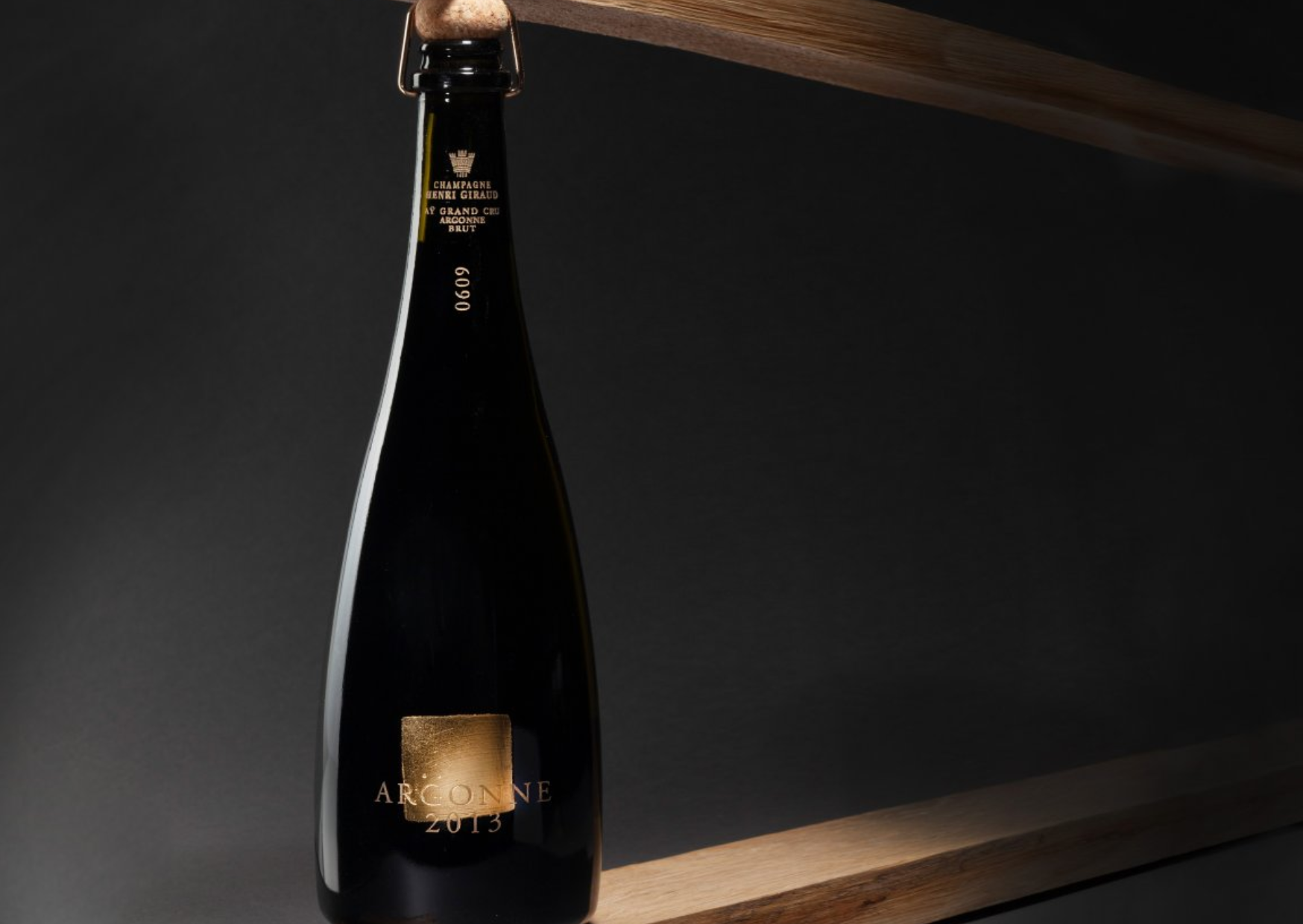
Sixty kilometres east of Aÿ, there is a forest that has been quietly shaping Henri Giraud's Champagne for decades, and it has nothing to do with vines. The Argonne forest grows on soil poor enough that its oak trees take around two hundred and fifty years to mature, well over the century and a half more typical elsewhere. The result is unusually dense wood, carrying more complex tannins than faster grown oak ever develops, and it is the only wood the house uses. Every barrel in the cellar comes from there, and only from there.
The house's own history stretches back further than the forest connection, to 1625, fourteen generations of the Giraud family in Aÿ, though the name on modern bottles only dates to 1945, when Henri Giraud returned from the war. His own story is a remarkable one even by the standards of a region full of long family histories. Deported to a concentration camp during the occupation, he escaped and went on to help found part of the French Resistance under General de Gaulle, alongside Yvette Nadi, who escaped with him and later had a local school named for her. Henri Giraud's name sits today on a statue in Épernay among the town's recognised wartime figures. The house marked four hundred years last June with a two day gathering bringing together partner producers and importers from across the trade.
It was Claude Giraud, now in his seventies and still actively involved, who built the modern reputation, reviving oak barrel vinification at a time when most of Champagne had already moved to steel. The house now runs two separate wineries side by side, one entirely in wood, used for fermentation, the other in steel, reserved only for blending rather than vinification itself, a division that keeps the oak character deliberate rather than incidental. Claude's daughter Emmanuelle Patour Giraud, thirteenth generation, now runs the house day to day alongside her husband Sébastien Le Golvet, the cellar master.
The Argonne relationship goes well beyond simply sourcing wood there. Every barrel carries its own identification card, tracing it back to the specific parcel of forest it came from, and the family selects new wood in person, roughly every three to five months, walking the forest themselves rather than leaving the choice to a cooperage. Even the position of a stave within a tree matters to the final wine. Lower staves, denser and more mineral, contribute comparatively little fruit character, while staves higher up the trunk, younger and more fibrous, bring more red fruit into the finished Champagne. With around two thousand six hundred barrels currently in use, the estate has been described, not unreasonably, as the largest working museum of oak barrels in France.
One innovation in particular reflects how far the obsession runs. A recurring flaw in barrel vinification is that the flat ends of a barrel, unlike the curved staves, are difficult to toast evenly, often leaving raw, untoasted tannin behind. The house developed its own solution, a proprietary end piece made from a ceramic and granite composite with an iron core, using enzyme driven thermal conduction to manage micro oxidation and temperature. It solves the toasting problem entirely and is patented, though deliberately never commercialised or sold to other houses. Barrels that eventually retire from wine production are not discarded either, finding second lives as furniture and packaging, and, in one unusual partnership, travelling to Japan, where the house Masuzumi ages sake inside former Henri Giraud Grand Cru barrels.
The wines themselves are built around a perpetual reserve system running since 1990, an underground tank naturally thermoregulated by the Marne river passing beneath it, holding steady at ten to thirteen degrees year round. Around fifteen per cent of each year's juice joins this reserve, with a portion drawn back out and blended into non vintage releases, layering thirty five years of harvests into wines that no longer belong to any single year. The house exports around eighty per cent of production to a hundred and seven countries, led by Japan, then China and South Korea, with roughly eighty per cent of sales going into gastronomic restaurants rather than retail.
Standing among two thousand six hundred barrels, each one traceable to a specific hillside in a forest most visitors have never heard of, it is difficult not to read the whole operation as an argument about time. Two hundred and fifty years for a tree to be ready. Thirty five years layered into a reserve tank. A family four hundred years into a project none of them individually started and none of them will individually finish. The forest, in the end, is not simply where the barrels come from. It is the clearest expression of how the house thinks.