The Winemaker Whose Parents Only Taste the Wine Once It's Released
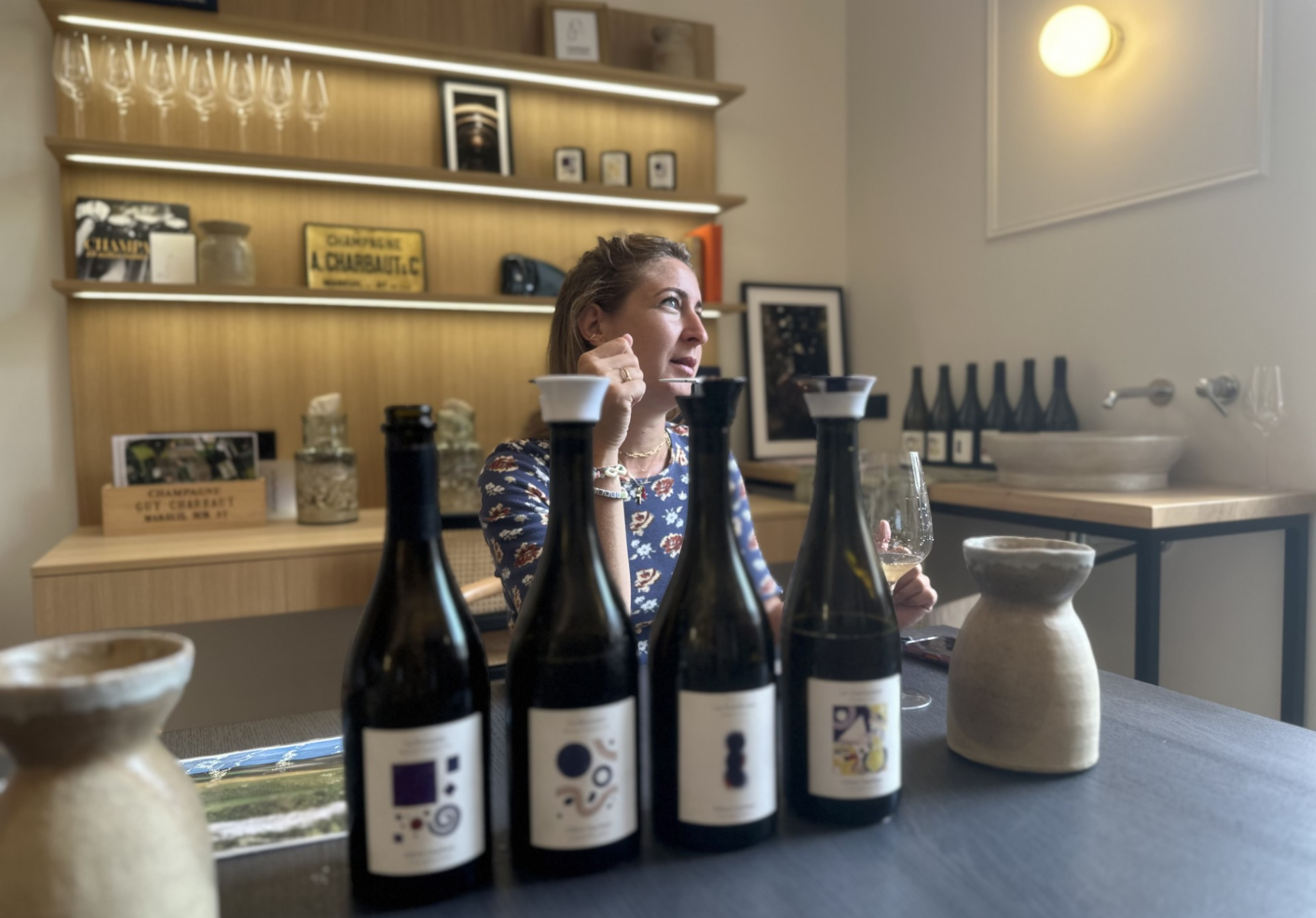
There is a particular kind of trust required to build something new inside a family that already has a name. Hélène Charbaut did not take over the family domain in Bisseuil. She built her own label alongside it, using her own plots, her own methods, and her own judgement, and her parents do not taste the results until the wine reaches the market, the same moment as everyone else.
It is worth sitting with how unusual that is. Most family succession stories in Champagne, and in wine more broadly, are about continuity: a child inheriting a style and either preserving it faithfully or slowly reshaping it from within. Charbaut's version is different. Rather than alter what her parents built, she asked to work separately, ring fencing a small portion of the fourteen hectare family domain, roughly three hectares, and starting again on her own terms.
She trained partly in Burgundy, and it shows. Where much of Champagne is built around blending across vintages for consistency, her wines do the opposite. Single variety, single terroir, fermented with indigenous yeast, aged only in oak, never in steel. Each vintage is deliberately allowed to taste like itself rather than like the one before it. There is no attempt to smooth a difficult year into resembling a good one.
Her three terroirs are all Premier Cru, and one in particular stands out. A Pinot Meunier plot in Bisseuil, planted by her grandfather in 1960, sitting on rare iron rich orange chalk, and understood locally as the only plot of its kind in the area. It also happens to be her highest, at around 200 metres, close to the ceiling for altitude anywhere in Champagne. Old vines, a singular soil, and a grape that rarely gets this kind of individual attention in the region. It is the sort of plot that, in the hands of someone less patient, might simply have been folded into a blend and lost.
The numbers tell their own story about the philosophy. Her first vintage produced roughly three thousand bottles. The following year, closer to eight thousand. She is targeting around one hundred barrels this year, with a ceiling of about twenty eight thousand bottles at full capacity, modest by the standards of the region, and clearly a deliberate one. Wine does not leave the cellar until it has had a minimum of three years, in keeping with regulation, and each release is bottled in July after ten months or more in barrel, with fermentation and malolactic conversion each often running four to five months. Nothing here is rushed to market.
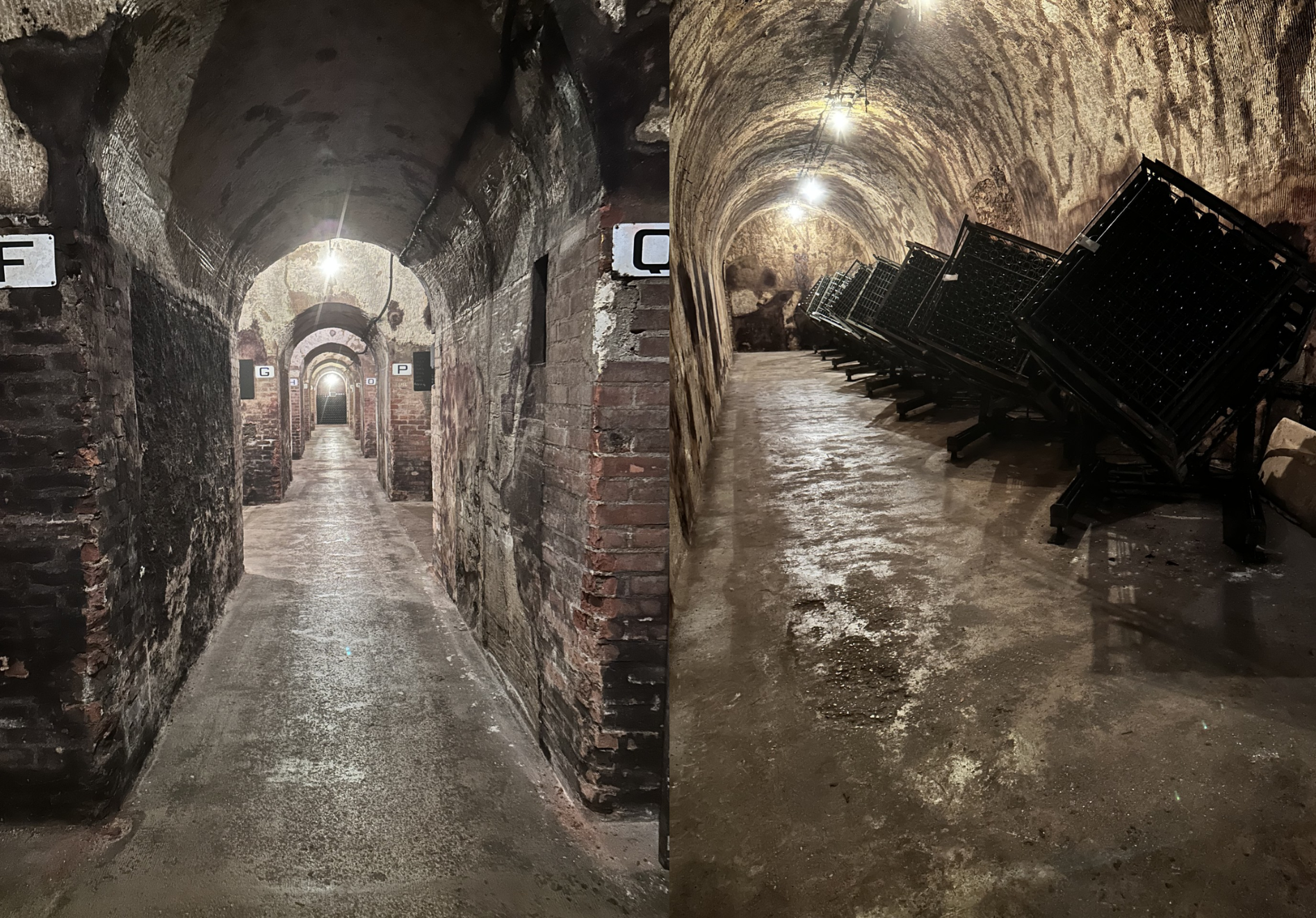
The cellar itself is part of the story. Twenty five metres beneath the chalk hillside, dating to 1810, and stretching some 1.5 kilometres, part of a larger network once shared with a neighbouring house. It held a particular kind of history before it held her wine: used historically by the Duke of Montebello, with horses once employed to move bottles through the tunnels. It sits at a constant ten degrees year round, with the humidity high enough that little intervention is needed to keep the wine settled.
Demand has already outpaced supply. The wines are sold exclusively through distributors and importers, reaching around thirty five countries, with France as the largest market followed by strong interest across Asia and a newer, growing audience among the yacht trade in the Caribbean. It is a pattern increasingly familiar across grower Champagne: as larger, more recognisable houses navigate the aftermath of post pandemic price increases, a portion of that demand has moved toward smaller, terroir driven producers with a clearer, more legible story to tell.
Charbaut's story is legible because it is specific. Not a rebellion against her family's wine, and not simply an extension of it either. A quieter proposition: that a fourth generation domain can hold two distinct voices at once, provided each one is given the space, the patience, and the restraint to say something true.