Pierre Paillard's history in Bouzy goes back to 1768, when Antoine Paillard first bought eleven hectares in the village, not to make his own wine, but to sell grapes to the houses that did, among them Roederer, Veuve Clicquot and Moët. It took until 1946, six generations later, for the family to bottle anything under its own name, and only then because the big houses, still recovering from the war, could no longer afford to buy grapes the way they once had. Growers across the region were left with little choice but to start making their own Champagne.
That accident of history is easy to forget standing in the cellar today, because nothing about the current wine reads as an accident. Antoine and Quentin Paillard, eighth generation, took over officially in 2016, having spent the years before that working abroad, Antoine in Hong Kong, Quentin in New York, both in wine and hospitality rather than in the vineyard. It was a trip to Burgundy in 2015, shortly before they took the reins, that changed the direction of the house. They came back convinced that oak barrel vinification, almost entirely absent from the family's own cellar until then, was the way to build the kind of structured, gastronomic Champagne they wanted to make.
The change was not cosmetic. Every wine now ferments directly in barrel after pressing, with no steel tank vinification anywhere in the process, and spends around ten months in oak between September and June. It brings a texture the brothers describe as creamy, with spice and woody aromatics that the fine sediment left in barrel helps protect from excess oxidation. Around ninety five per cent of the barrels come from Burgundy, the rest from Austria, kept specifically for structuring Pinot Noir in warmer vintages. Each barrel is retired after seven to ten years and sold on, some to other Champagne houses, some to bourbon and whiskey producers in the United States, with new barrels making up only around ten per cent of the barrel room in any given year. Nothing is replaced faster than it needs to be.
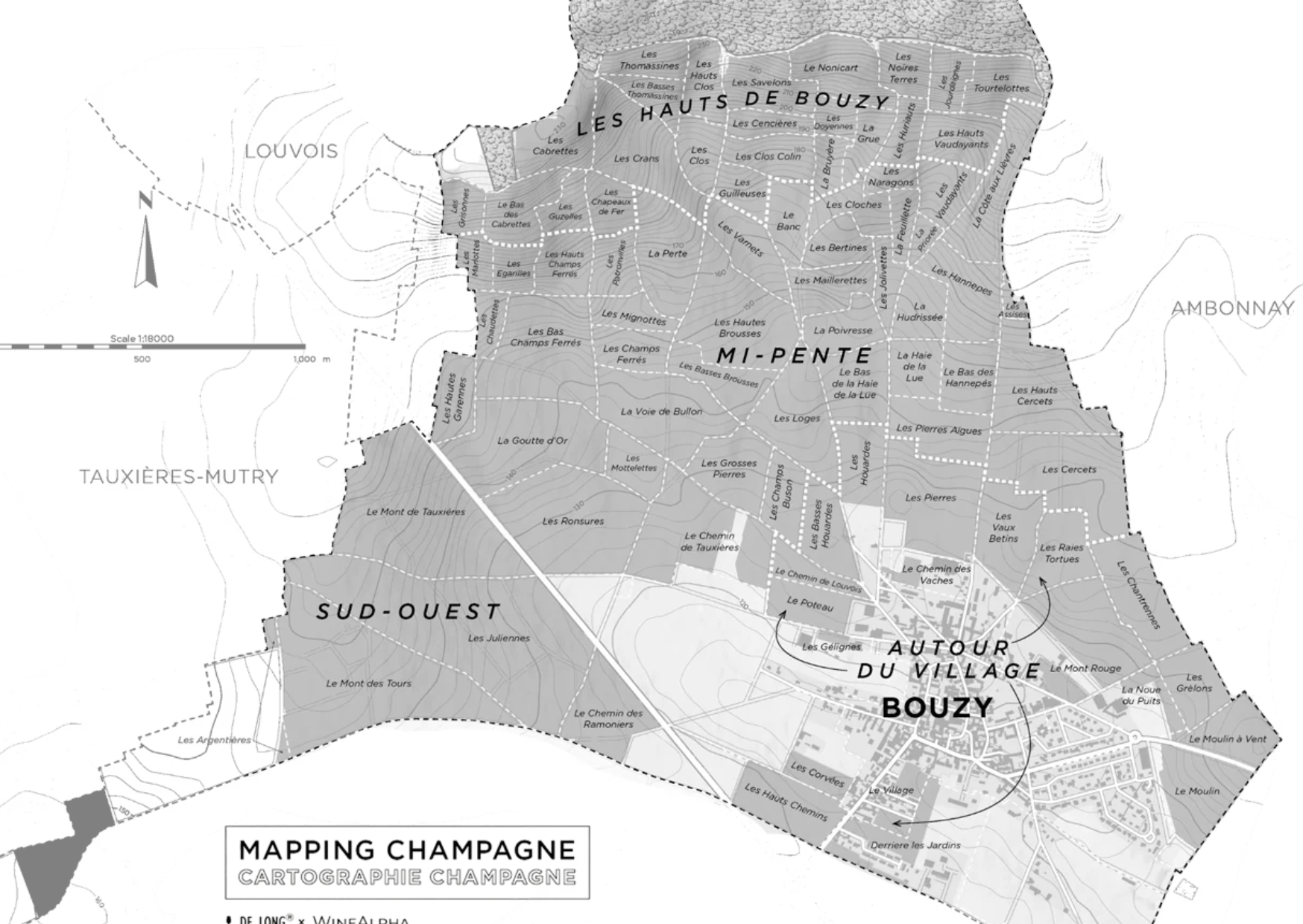
The estate has been certified organic since 2020, farmed across eleven hectares divided into twenty eight separate plots, roughly eighty per cent Pinot Noir and twenty per cent Chardonnay, almost entirely within Bouzy itself. Since 2018 the brothers have also bought grapes from a small number of neighbouring villages, always organic, always from old vines, but the house holds firmly to one rule regardless of where the fruit comes from. Nothing is ever blended across villages. Every wine is either single village or single plot, never a composite of both.
Two of those villages, tasted side by side, make the point better than any description could. Fruit from Ludes, planted mid slope on chalk where water drains away quickly, produces something saline and intensely mineral, the roots forced deep in search of moisture. Fruit from Taissy, at the foot of the slope on clay where water lingers, gives something rounder, spicier, closer to dried fruit. Same grape, a few kilometres apart, and the wines barely resemble one another. It is, in miniature, the entire argument for keeping villages separate rather than folding them together for consistency.
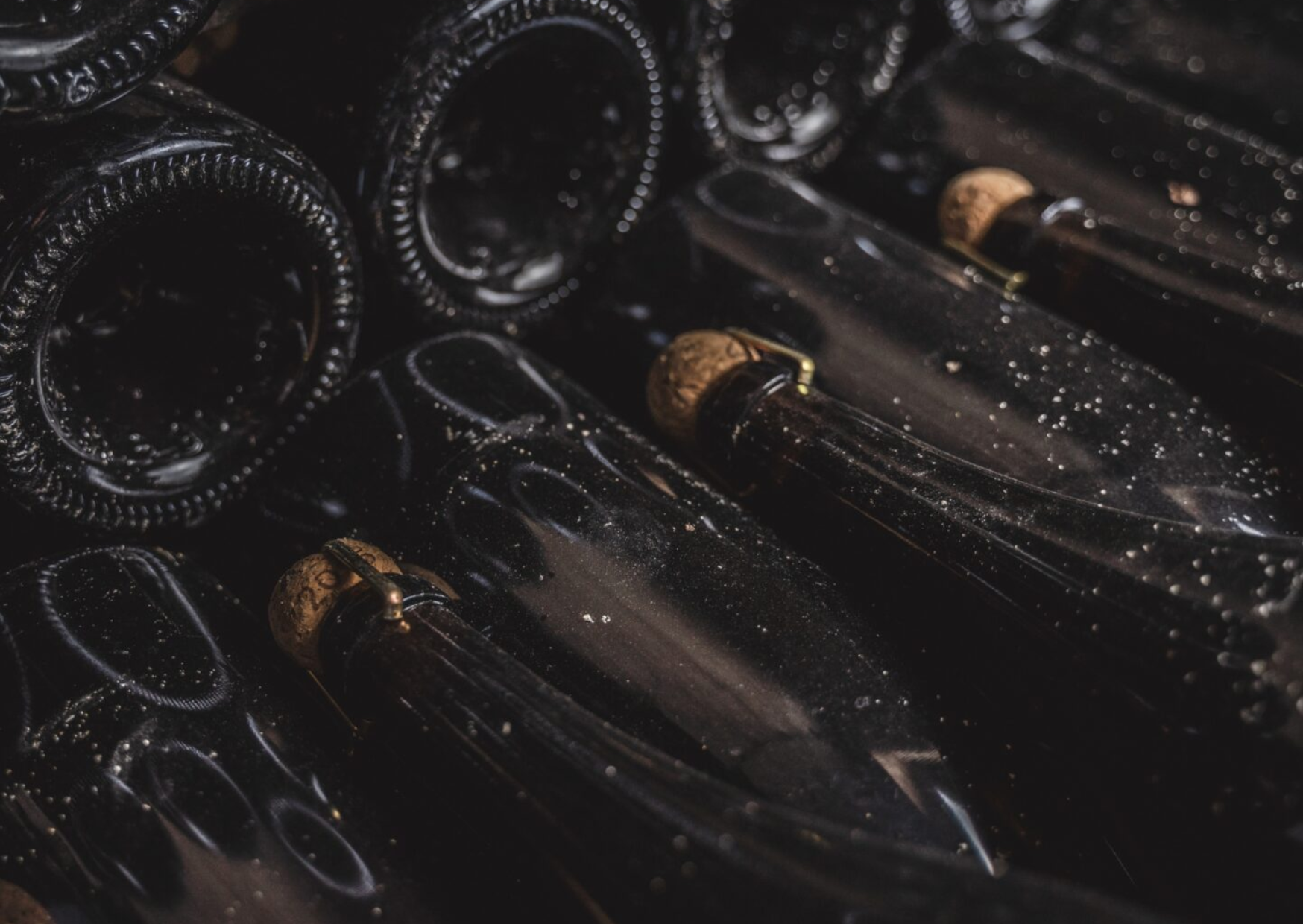
Patience runs through the cellar itself. Non vintage wines are sealed with a metal cap and held for three years, protected entirely from oxygen. Vintage wines move to cork instead, ageing four to five years, allowing a slight, deliberate oxidation that builds complexity over time. At the top of the range, La Grande Récolte, the house's prestige cuvée, spends ten to thirteen years on cork before release, and is not exported at all, reserved instead for a handful of France's gastronomic restaurants. Even the earlier steps favour patience over efficiency. Riddling is done by machine rather than hand, a choice that trades six weeks of labour for one, but the time saved appears to be reinvested rather than simply kept, given how long the wines are then left to age regardless.
The most recent vintage tested that patience directly. A late frost in February 2026, arriving after an unusually early bud break, wiped out around thirty per cent of the crop in some nearby areas, Ludes among them. Bouzy itself was largely spared, its south facing aspect offering a degree of natural protection that flatter, less favoured sites did not have. It is a reminder that terroir is not simply a flavour argument. In a difficult year, it can be the difference between a crop and no crop at all.
The brothers have said they would consider buying more land if the right opportunity came along, but nothing about the cellar suggests urgency toward growth. Twenty eight plots, farmed slowly, aged patiently, and never blended into something easier to sell, is evidently enough.