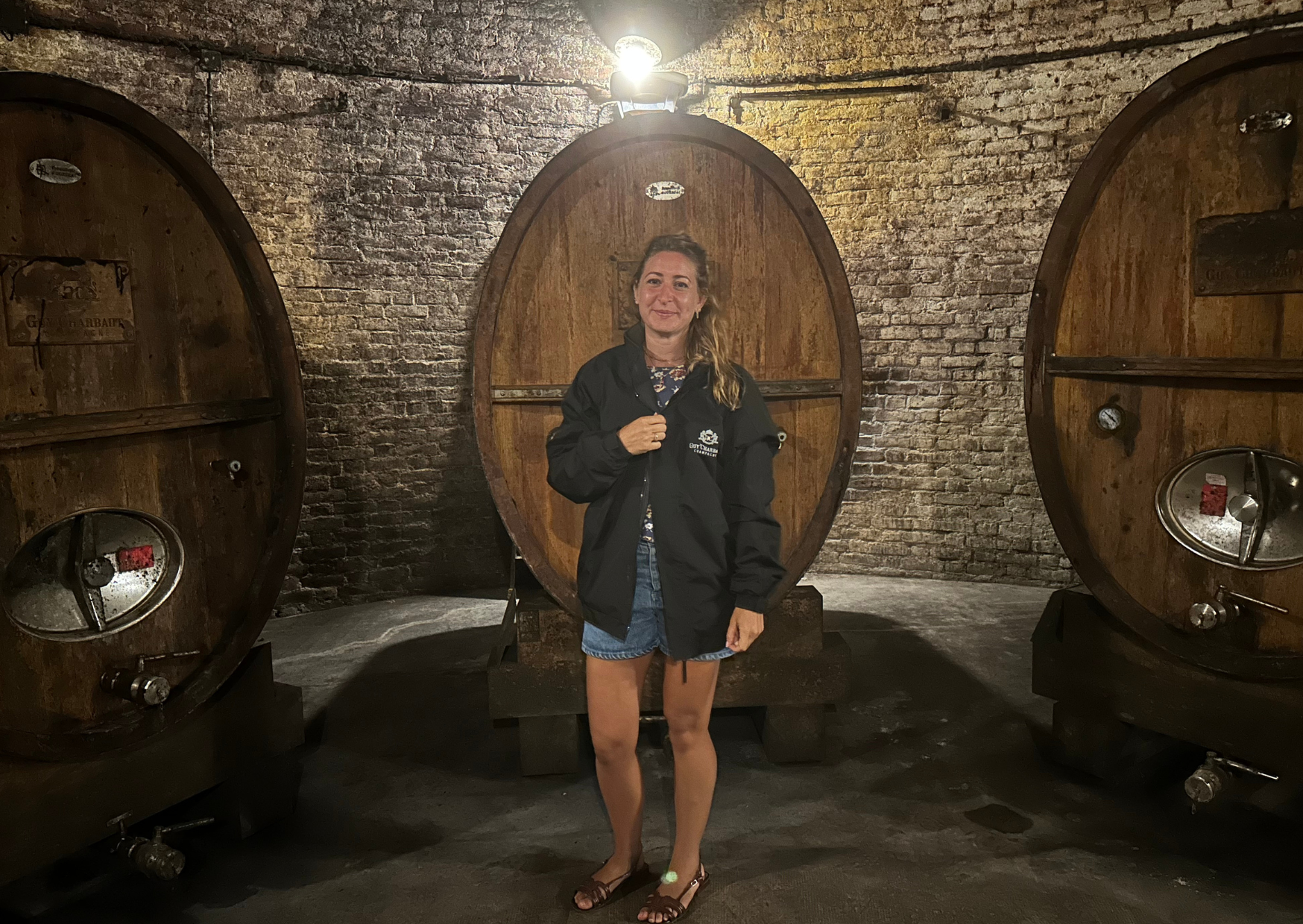
I saw the same idea twice in one weekend, at opposite ends of its life, and I have not quite stopped thinking about it since.
At Hélène Charbaut's cellar in Bisseuil, twenty five metres under the chalk, she showed me what she called her perpetual reserve. A blend built from vintages 2021 through 2025, added to year on year, still young enough that you could watch it being built rather than simply taste the result of decades of it. It is, by her own account, still finding its shape. A handful of harvests deep into what will eventually become a much longer story.
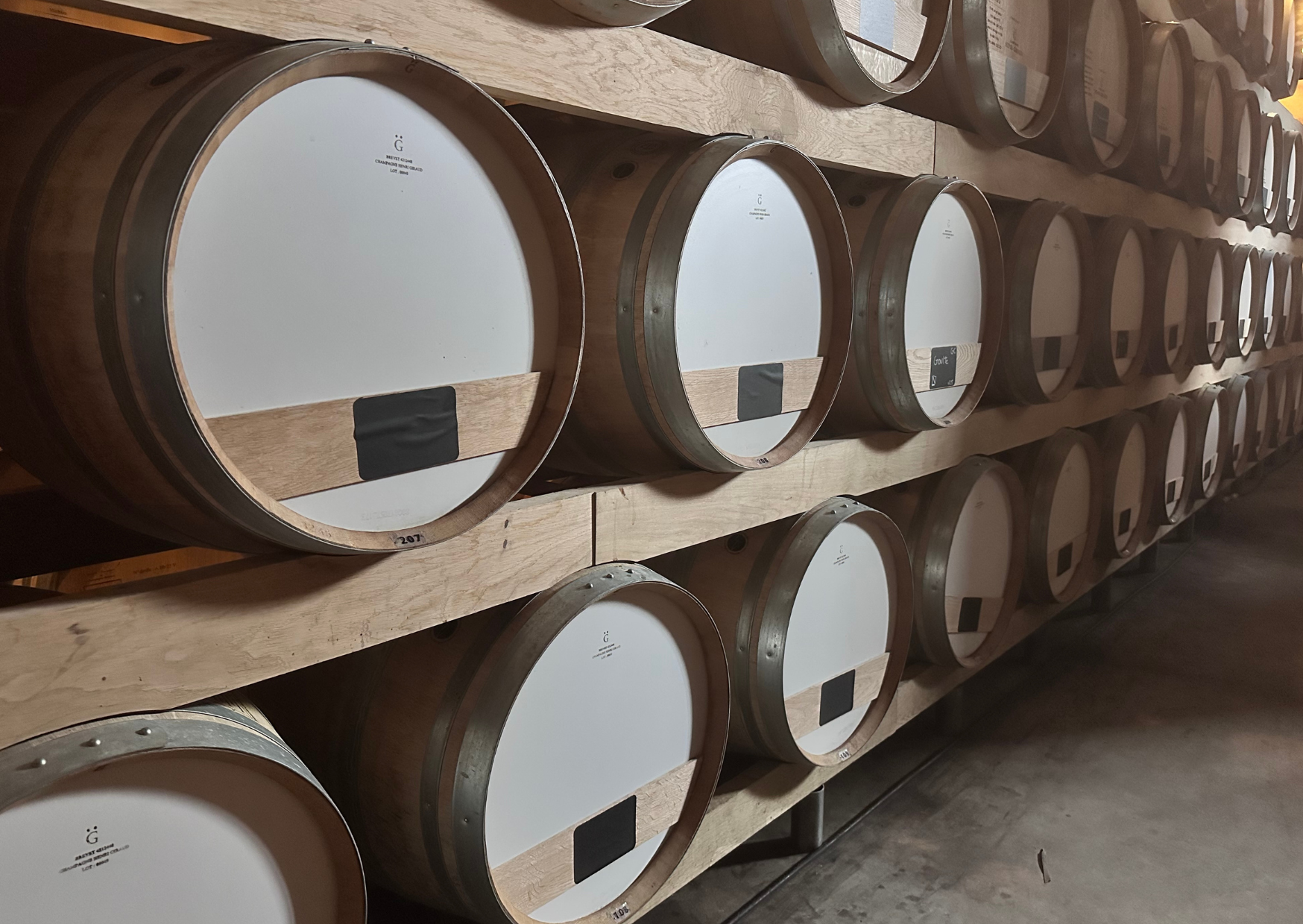
The next afternoon, at Henri Giraud, I stood in front of something that does the same thing at an entirely different scale. A reserve system running since 1990, housed in an underground tank thermoregulated, almost improbably, by the Marne river running beneath it. Roughly fifteen per cent of each year's juice goes in, and a portion comes back out, blended into the new release. Thirty five years of vintages, layered into itself, none of them fully separable from the others anymore.
Two cellars, two families, the same technique, and thirty odd years between them.
What struck me was not the age gap so much as what it revealed about patience as a decision rather than simply a virtue you either have or do not. Charbaut is, in a sense, doing now exactly what Giraud started doing in 1990. Neither of them will fully see where their own reserve ends up. She will not taste her solera in its fortieth year. Someone at Giraud, thirty five years ago, made a choice they knew they were making largely on behalf of a future they would only partly witness.
There is something quietly moving about that, once you notice it. A perpetual reserve is not really a winemaking technique. It is a bet placed on behalf of people who have not been born yet, or who were children when the first vintage went in. It only works because someone was willing to start a very long project and hand the middle of it to somebody else.
I keep coming back to the fact that I got to see both ends of that same bet in the space of twenty four hours. One barely begun, still visibly being built, every addition still traceable and recent. The other so blended into itself by now that no single vintage could be pulled back out even if you wanted to.
It made me think differently about restraint, actually, which is a word I use often enough that I worry it has started to lose its edge. Restraint is usually framed as a decision made in a single moment, choosing the better bottle over three lesser ones, saying no to something in front of you right now. A perpetual reserve is a different, quieter kind of restraint. It is choosing, once, to keep saying no, for decades, to the temptation of using each vintage entirely for itself.
I do not know what either of these reserves will taste like in twenty years. Neither, really, does anyone currently working at either house. That is rather the point. Somewhere in Bisseuil and somewhere in Aÿ, two families are each quietly building something that only makes sense on a timeline longer than any one winemaker's career, and trusting that whoever is standing in that cellar decades from now will understand why it was worth doing.